


Winning in your local market is everything to business owners with multiple branches across the country or a geographical location.
Having over 100 stores or business branches across a country and not winning in the individual local searches can spell doom for chain store businesses, and can only mean you have smaller municipal or district competitors taking up the space in all your store localities. ech giants are worth trillions because they innovate. They are the forerunners of innovation in their respective industries.
THE PROBLEM
- You have over 2000 tea shops across the United Kingdom or any other country.
- You rank well for “keywords + country” or “keyword + states” , probably keywords like tea shop in UK, tea shop in London.
- But does poorly when compared to local competitors in the counties and municipalities across the country.
You win country and city searches related to your business but lose the towns and district related searches. There are, however, over 300 city councils ( boroughs, counties, districts).
Yes, we get it, the city is bigger, but your business belongs to the community. Someone living in Bromley or Camden is only interested in places within their area and not the whole of London.
The success of your business will be severely affected if you’re being outranked or beaten by smaller local shops in the boroughs and county.
This is where multi-store businesses are losing opportunities. Yes, they probably have a national brand, and great online authority, but they’re being picked apart ruthlessly because they are either under utilising their brand or they simply don’t care.
Locational data is a big ranking factor in organic SERP, especially for very short local keyword terms like Pizza, Cinema, Ice-Cream, Tea Shops, Restaurant etc. And search engines like Google often consider your historical locational data to determine organic SERPs for such terms.
Just like governance, where the real politics is local, and there’s no way you can become Prime Minister if you lose the MPs’ confidence. In local business, SEO is also local, there’s no way you can be a total regional or national brand without the county, district and the city councils.
Here are 7 tips to improve your visibility to not just winning the country and statewide but to extend your strategies to local markets where the bulk of your customers are.
1. Have a Google My Business Page(s) (GMB)
- This is arguably the most important Local SEO effort you should invest in. Because, for most local keyword searches, the Google Business Listings often comes top of the Organic SERPs.
- Register for a GMB account and use it to list all your store branches. Ensure you optimise each listing for reviews, engagements, images and locations.
- Ensure you optimize each store listing for specificity. List the branch’s customer care line and not for the headquarters. Make sure each listing content is unique and use the store URL if it has one. I.e https://www.abc.com/london/ if the store is in London. Do not use https://www.abc.com/ for all your stores.
2. Create Both Category & Individual Pages for Every States/Districts/
GMB listing is NOT the only organic SERP for local searchers. There are usually between 4-12 other web listings you can attempt to rank for.
A Lot of businesses do not utilize this opportunity to gain multiple SERP hence, losing numerous other opportunities for online sales/deliveries.
- Create specific pages for the main branch
- Nationwide/International – https://www.abc.com/
- States/City – https://www.abc.com/texas/
- Individual Store in counties/boroughs – https://www.abc.com/london/ealing etc
- Ensure each page has unique content to avoid duplication (From store images, contact, delivery information, Google Map Location, etc)
- Optimize the Title tag and content for location: I.e.
- Nationwide/International – https://www.abc.com/ (Title Tag: ABC: The Tastiest Pizza Brand in the United Kingdom)
- States – https://www.abc.com/london/
Title Tag: Order ABC Tasty Pizza in London
Do this for all the cities where you have branches.
- Individual Store – https://www.abc.com/london/ealing ,camden or westminster etc.
Title Tag: Order ABC Tasty Pizza in Ealing, London, Title Tag: Order ABC Tasty Pizza in Westminster
Do this for all the stores/branches in the city.
By doing this, you can easily have both your GMB and web page on organic SERP. With locational data, potential customers in Ealing, Camden, Westminster in London, and many other smaller municipalities within the city can see localised pages that are optimized for their areas.
This helps you boost both walk-ins and online conversions at the same time. Presently, such space is dominated by marketplaces like Doordash, UberEats, Thumbtack etc. And directories like Yelp, Yell, Business Forums etc.
Nothing stops your brand from changing the narrative. Search engines will most likely give you priority because of your brand too!
Problem solved! You can now rank for;
- Keyword + Country, Keyword + City, and Keyword + municipalities.
- With Google’s locational data, you can also rank for individual local searches like “pizza”. Etc.
3. Create Both Category & Individual Pages for Every Location + Product
Now that you’ve created pages capable of ranking in all states and locations your store is located, it’s time to rank for the products in those locations too. Now this can be a bit confusing at first, especially if you’re new to SEO.
Here you can create a page where customers can filter products based on which locations it’s available in. Imagine you sell 15 different types of Pizza, but the offering differs according to location.
Let us do an example with Sicilian and Italian Pizza:
Example 1:
Product + Location
Sicilian Pizza + London
Page URL : abc.com/london/sicilian-pizza
Page Title: Order Tasty Sicilian Pizza in London
You can also do this for individual locations
Product + Individual Location
Sicilian Pizza + Camden London
Page URL : abc.com/london/camden/sicilian-pizza
Page Title: Order Tasty Sicilian Pizza in Camden, London
Example 2:
Product + Location
Italian Pizza + London
Page URL : abc.com/london/italian-pizza
Page Title: Order Tasty Italian Pizza in London
You can also do this for individual locations
Product + Individual Location
Italian Pizza + Westminster
Page URL : abc.com/london/westminster/italian-pizza
Page Title: Order Tasty Italian Pizza in Westminster, London
Imagine doing the same thing for all the products you have across all locations! You’ll have definitely won the Local SEO war ahead of your competitors. For accessibility’s sake, you can have a filter or search feature below the menu on all the pages that allows customers to move to any of these pages easily.
Alternatively you have a central page where all the locations are listed. To rank for the “Near me” Keyword. I.e ABC Coffee Shop Near Me. Ensure the page collects users’ locational data to be able to rank the shops according to a customer location.
NB
- The painted picture above might cause a lot of duplicate content issues, it’s important that content(images, text etc) on each page are unique to its location.
- This might not be necessary if you have an e-commerce store that is connected to all branches.
4. Choose your Battles Wisely
Marketing channels, like SEO, are heavily dependent on data . And as such, you have to look at making decisions on what product or locations to prioritize. Of course, no one has a bottomless marketing budget, hence the need to choose your battles wisely.
Competitor research in SEO is as important as competitors research in every other business sphere. And for you to prioritize which battle to start with, you have to look at two things; the competitors, digital footprint, and sales potential for each location.
Imagine you’re looking to implement the 2nd and 3rd point in this article, but you do not have enough budget to start with all your business locations, it’s only necessary to make your next decision with data.
| Item | Location A | Location B |
| Competitors | 20 | 10 |
| Potential Monthly Sales | £8,000,000 | £4,000,000 |
| Major Online Competitors – Local SEO | 13 | 3 |
Which location would you prioritize?
5. Directories & Aggregator Site
Local directories are one of the best ways to get business visibility. You need to exploit that to the best possible point.
You might consider listing each of your business locations on the popular directories in your locality. The popular directories, most of the time are those on the first page of the SERP for your locations.
Here are a few directories to list your business.
If you own a tea shop in Coventry , here is where you need to list your business.
6. Manage Reviews
For local businesses, reviews could make or mar your sales. Reviews are one of the easiest ways to improve business branding, customer retention and general word of mouth marketing.
I’ll trust what my friends and colleagues say about your business rather than what you say it is. Reviews are effective, and managing them is as important as any marketing tactics.
Here are some things you can do to manage reviews;
Make it easier for customers to give reviews on your GMB, Social Media and Directory Pages.
- Send links to your profile pages and ask for reviews as part of your email marketing campaign. This is effective after a customer must have used your product or services. Uber’s driver review request after a ride has been the most successful example for me.
- You can convert your profile link to a QR Code and print it on important customer facing materials. On a restaurant table, your office door, menu plan, etc.
- Give incentive for reviews when necessary.
- Respond to reviews and resolve as many complaints as possible.
- Using customer reviews is one of the best content to use for paid marketing.
NB: If you have a bad product or customer service, this is not going to be a good experience.
7. Measure Success with the Right Data
Running point for a business with multiple locations is no child’s play. The biggest question to convince your management that this is a good idea to run with is results.
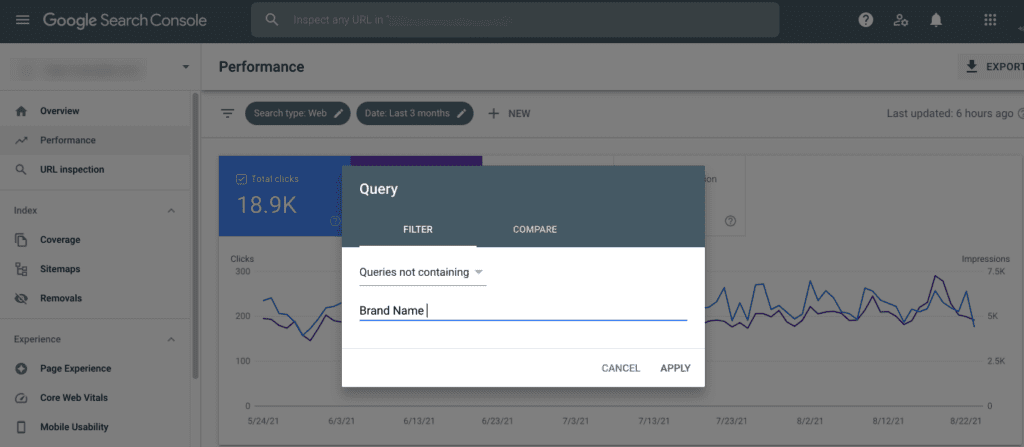
The burning questions will be; What metrics should you use to determine success? Many local seo efforts are known to overlap with brand marketing, making it really difficult to explicitly measure direct metrics. We can however make the right correlations as follows;
- Organic traffic from “non branded or navigational” keywords.
Conclusion
Business directories and marketplaces are obviously the biggest gainers in many local business spaces. But nobody says the local SERPs are for them alone. You can start setting the pace and be a game changer in your respective industries.